For a long time, brain aneurysms were among the most feared neurological conditions- mostly silent until they ruptured and caused bleeding that could lead to death. The choices of treatments have changed significantly over ten years to be less dangerous and more minimally invasive. Brain coiling is one such revolutionary change.
Being a neuro-intervention specialist, I consider it my duty to inform the public about the impact of brain coiling on the treatment of aneurysm and the reason why patients now can be more optimistic than ever.
What Is Brain Coiling?
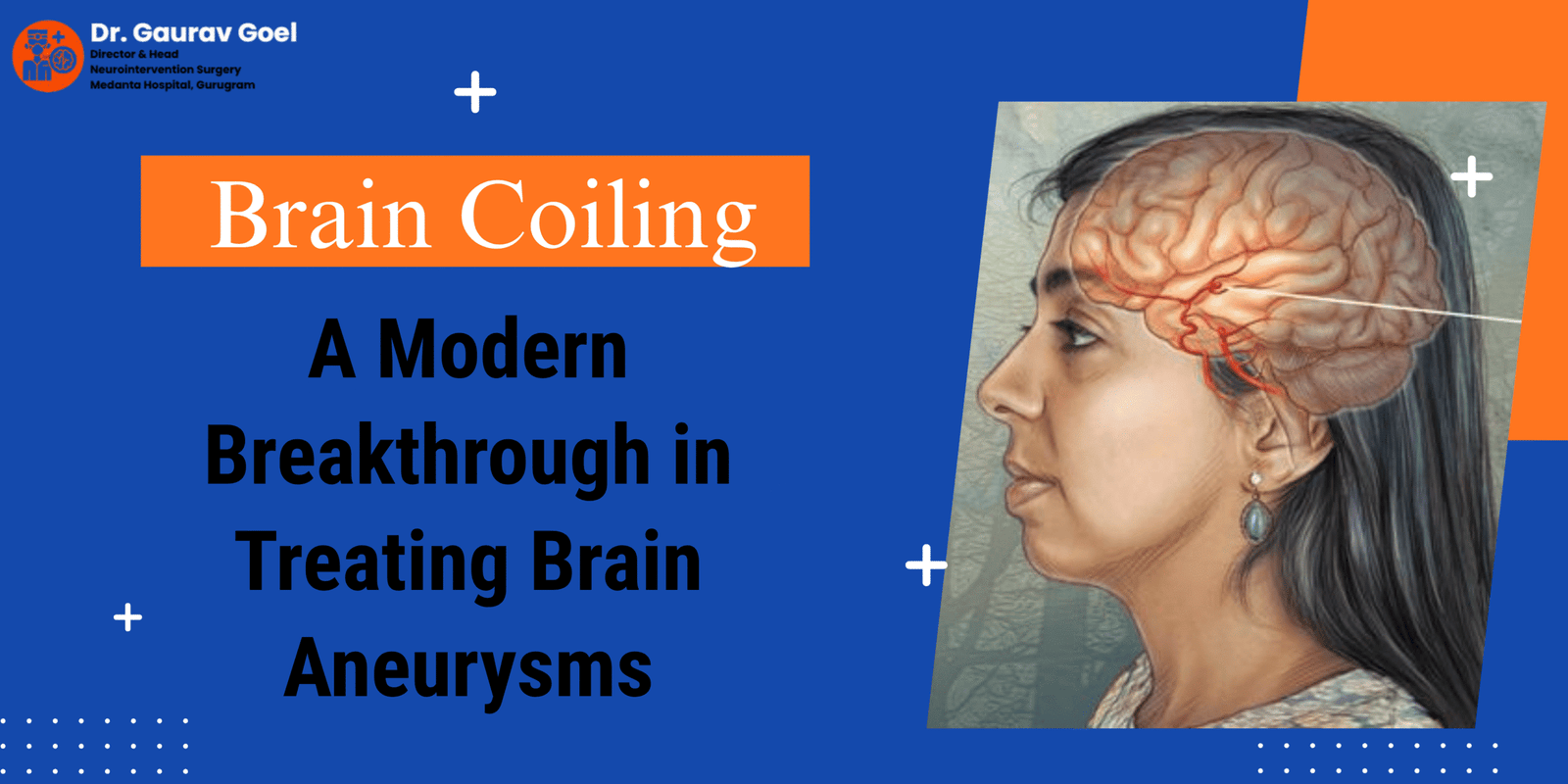
Brain coiling is a less traumatic endovascular method that helps to cure brain aneurysms. This method doesn’t require any open surgery. In this process, a tube (catheter) with coils made of soft platinum is sent from the leg artery to the aneurysm. The coils obstruct the flow of blood to the aneurysm, thus stabilizing[o1] it and averting it from bursting again.
Why Brain Coiling Is a Safer Choice?
In comparison to conventional open surgery (clipping), brain coiling has fewer disadvantages and more advantages, such as:
• Minimally invasive – No cutting of the scalp or opening of the skull
• Quicker recovery – The majority of patients can go back to their homes within a few days
• Lower complication rates when used in the right cases
• It can even be used effectively in situations such are as a ruptured aneurysm
The patient group that is therefore mainly composed of elderly people or those with complex aneurysm locations is highly coiling brain patients.
Brain Coiling: Who Are the Potential Patients?
Patients with a diagnosis of:
• Unruptured brain aneurysms
• Ruptured aneurysms leading to subarachnoid haemorrhage
• Deep brain aneurysms
The determining of the best treatment is done by a thorough individual assessment of each case considering the size, shape, and location of the aneurysm.
The Future of Neurovascular Care
One of the main reasons brain coiling keeps on being a safer and more effective method is due to the improvement in imaging, microcatheters, and coil technology. As a result, our role as specialists is to provide each patient with the diagnosis that is made in time and the treatment that is tailored to their needs, thus, preventing any tragic consequences.
Promoting awareness is a way of rescue. In case you or someone whom you know experiences extreme headaches, vision changes, or neurological signs, then, a rapid medical assessment is unquestionably necessary.
Patient Experience & Recovery
The majority of patients who undergo brain coiling complain of pain that is significantly less in comparison with the case of open surgery. The time of the intervention is usually between one and three hours, and, after that, patients are under short-term surveillance in the neuro-ICU carried out to ensure their safety. In most cases, patients are allowed to walk within 24 hours, while the follow-up visits are scheduled for testing the clips on the aneurysms with scans. This uncomplicated recuperation method not only shortens hospital stay but also makes the patients able to get back to their usual life much earlier.
Why Early Detection Matters?
Understanding the importance of early detection of brain aneurysms will greatly lead to more successful treatments. Thanks to the advanced MRI and CT angiography technologies, the discovery of an aneurysm can be made even indirectly in the majority of cases, thus, a rupture is avoided. In particular, screening is advised for those whose family members have had aneurysms, smokers, and hypertensive patients whose blood pressure is not under control. Pioneering coiling of the brain when the diagnosis is made, thus, will be a perfect way of preventing the occurrence of complications and ensuring the brain’s health in the long run.