When facing a serious neurological condition, choosing the right neurosurgeon is one of the most important decisions a patient and family can make. Patients searching for the best neurosurgeon in Iraq may be looking for experienced specialists, advanced technology, minimally invasive treatment options, or a second opinion for a complex diagnosis.
While Iraq has a growing network of qualified neurosurgeons and specialist centres, some patients with complex neurological conditions may also consider treatment abroad, particularly when they require advanced neurointerventional procedures, multidisciplinary care, or a highly specialised second opinion.
For patients from Iraq considering treatment in India, Dr. Gaurav Goel, Senior Director & Head of Neurointervention Surgery at Medanta, Gurugram, offers specialised expertise in the diagnosis and minimally invasive treatment of complex neurovascular conditions.
What Does a Neurosurgeon Treat?
Neurosurgery is a highly specialised branch of medicine involving the diagnosis and treatment of conditions affecting the brain, spinal cord, nerves and blood vessels supplying the nervous system.
Depending on the diagnosis, treatment may include medication, observation, minimally invasive procedures, endovascular treatment, conventional surgery, rehabilitation, or a combination of approaches.
Common neurological and neurovascular conditions requiring specialist evaluation include:
- Brain aneurysms
- Stroke
- Arteriovenous malformations (AVMs)
- Carotid artery disease
- Intracranial vascular conditions
- Brain and spinal vascular abnormalities
- Certain causes of vascular headaches
- Spine-related conditions
- Conditions requiring neurointerventional procedures
The appropriate treatment depends on the patient’s diagnosis, medical history, imaging findings, age, overall health and severity of the condition.
How to Choose the Best Neurosurgeon for Your Condition?
The term “best neurosurgeon” should not be based only on online rankings or general reputation. The right specialist is one whose expertise closely matches the patient’s particular condition.
Before choosing a neurosurgeon, Iraqi patients and their families should consider:
1. Specialisation and Experience
Different neurological conditions require different areas of expertise. A specialist experienced in neurovascular conditions may be particularly appropriate for patients with aneurysms, AVMs or certain types of stroke.
2. Experience With the Specific Procedure
Patients should ask how frequently the doctor performs the procedure being considered and whether the treatment is appropriate for their specific anatomy and diagnosis.
3. Advanced Treatment Options
Modern neurointervention can allow certain conditions to be treated through minimally invasive techniques rather than traditional open surgery. Depending on the condition, procedures may include coiling, flow-diverter placement, embolisation or stenting.
4. Multidisciplinary Care
Complex neurological cases may require collaboration between neurosurgeons, neurologists, neuroradiologists, neurointervention specialists, intensivists and rehabilitation teams.
5. Hospital Infrastructure
A specialist should ideally work within a hospital that has advanced imaging, neurocritical care, emergency services and the technology required for complex neurological treatment.
Why Iraqi Patients May Consider Neurosurgery in India?
India has become an important destination for international patients seeking specialised medical care. Iraqi patients considering treatment abroad may choose India because of the availability of specialised doctors, advanced tertiary-care hospitals and multidisciplinary treatment programmes.
For complex neurosurgical and neurovascular conditions, patients may seek an additional expert opinion before deciding on treatment.
International patients can also arrange medical evaluations before travelling by sharing relevant medical records and diagnostic scans with the treating team.
Meet Dr. Gaurav Goel – Neurointervention Specialist in India
Dr. Gaurav Goel is Senior Director & Head of Neurointervention Surgery at Medanta, Gurugram, India.
He has more than 15 years of experience and has specialised in neurointervention and interventional neuroradiology. His medical training includes a DM in Neuroradiology from NIMHANS, Bengaluru, and a Fellowship in Interventional Neuroradiology from the Montreal Neurological Institute, McGill University, Canada.
His areas of expertise include:
- Intracranial aneurysm treatment
- Aneurysm coiling
- Flow-diverter treatment
- AVM embolisation
- Carotid stenting
- Intracranial stenting
- Stroke intervention
- Vascular headaches
- Spine pain management
According to his professional profile, Dr. Goel’s neurointervention unit treats more than 1,000 patients annually and performs more than 250 complex procedures. He has also contributed to medical research through more than 100 peer-reviewed publications and participates in international education and training in neurointerventional techniques.
Advanced Neurointerventional Treatment for Brain Aneurysms
A brain aneurysm is an abnormal bulging of a blood vessel in the brain. Some aneurysms may remain unruptured, while rupture can cause a potentially life-threatening subarachnoid haemorrhage.
Depending on the aneurysm’s size, location, shape and other patient-specific factors, treatment may involve observation, endovascular treatment or surgical clipping.
Dr. Gaurav Goel specialises in endovascular treatment options including:
Aneurysm Coiling
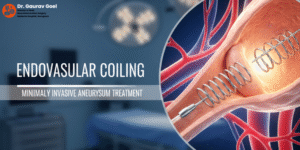
Coiling is a minimally invasive procedure in which small coils are placed inside an aneurysm to reduce blood flow into the abnormal sac and help prevent rupture or rebleeding.
Flow-Diverter Treatment
A flow diverter is a specialised stent designed to redirect blood flow away from an aneurysm while promoting gradual healing of the vessel.
The appropriate technique depends on the individual aneurysm and should be determined after detailed imaging and specialist evaluation.
AVM Embolisation
An arteriovenous malformation, or AVM, is an abnormal connection between arteries and veins.
AVMs can occur in the brain and may sometimes cause bleeding, seizures or neurological symptoms. In selected cases, endovascular embolisation may be used as part of the treatment strategy.
The treatment plan can involve embolisation alone or a combination of embolisation, surgery and/or radiosurgery depending on the characteristics of the AVM.
Stroke Treatment
Stroke requires rapid medical attention. In selected patients with an acute ischaemic stroke caused by a blocked large blood vessel, mechanical thrombectomy may be used to remove the clot and restore blood flow.
Because treatment effectiveness can depend strongly on time, patients with symptoms such as sudden weakness, facial drooping, difficulty speaking, loss of vision or severe imbalance should seek emergency medical care immediately rather than arranging an international consultation.
Why Iraqi Patients May Seek a Second Opinion?
A second opinion can be particularly useful when:
- A complex brain or vascular condition has been diagnosed.
- Surgery has been recommended.
- Multiple treatment options are available.
- The patient wants to understand minimally invasive alternatives.
- A previous procedure has not produced the expected result.
- The family wants confirmation of the diagnosis or proposed treatment.
Patients travelling from Iraq can provide MRI, CT, angiography and other relevant medical records to a specialist before travelling, allowing the medical team to understand the case and determine whether an in-person evaluation is appropriate.
What Iraqi Patients Should Ask a Neurosurgeon?
Before selecting a specialist, patients should consider asking:
- What is my exact diagnosis?
- Is treatment necessary immediately?
- What treatment options are available?
- Is minimally invasive treatment possible?
- What are the potential risks and benefits?
- How frequently does the specialist perform this procedure?
- What investigations are required before treatment?
- How long might hospitalisation and recovery take?
- What follow-up will be required after returning to Iraq?
- Should I obtain another specialist opinion?
These questions can help families make a more informed decision rather than choosing a doctor solely because of a search-engine ranking.
Why Consider Dr. Gaurav Goel for Neurointervention in India?
For Iraqi patients looking for an experienced specialist in advanced neurointerventional treatment, Dr. Gaurav Goel provides expertise in several complex neurovascular procedures.
His international academic training, experience in neurointervention and involvement in advanced technologies such as flow-diverter treatment make him a potential specialist for patients seeking expert evaluation for conditions such as brain aneurysms, AVMs and stroke.
His professional profile lists training at NIMHANS and McGill University and experience in advanced neurovascular procedures.
Treatment Journey for Patients Travelling From Iraq to India
Patients considering treatment in India can generally begin by sharing their medical records and diagnostic reports with the specialist team.
The medical team may review:
- MRI scans
- CT scans
- CT angiography
- MR angiography
- Digital subtraction angiography (DSA), where available
- Previous treatment reports
- Medication history
- Previous surgical records
After reviewing the available information, the specialist can determine whether an in-person consultation and further investigations are required.
For international patients, arrangements may also involve hospital appointments, travel planning, medical documentation and post-treatment follow-up.
Frequently Asked Questions
Who is the best neurosurgeon in Iraq?
There are qualified neurosurgeons practising across Iraq, and the right specialist depends on the patient’s specific condition. For complex neurovascular conditions, patients may also consider an international second opinion from a specialist with specific neurointerventional expertise.
Can Iraqi patients travel to India for neurosurgery?
Yes. Iraqi patients can seek specialised medical treatment in India. Patients should first share their medical records with the hospital or specialist team to determine whether treatment in India is appropriate.
Which conditions does Dr. Gaurav Goel treat?
Dr. Gaurav Goel specialises in neurointervention, with expertise including intracranial aneurysms, AVM embolisation, carotid and intracranial stenting, stroke intervention, vascular headaches and selected spine interventions.
Does Dr. Gaurav Goel treat brain aneurysms?
Yes. His listed expertise includes intracranial aneurysm treatment using techniques such as coiling, flow diverters and intrasaccular devices.
Can I get a second opinion from India before travelling from Iraq?
Patients can contact the specialist team and provide their available medical reports and imaging for an initial assessment. The treating specialist can then advise whether an in-person consultation or further investigations are required.
Final Thoughts
Finding the best neurosurgeon in Iraq should begin with understanding the patient’s exact diagnosis and identifying a specialist with relevant expertise rather than relying solely on general rankings.
For patients with complex neurovascular conditions such as brain aneurysms, AVMs or certain types of stroke, specialised neurointerventional expertise can be particularly important.
For Iraqi patients considering advanced treatment in India, Dr. Gaurav Goel in Gurugram offers specialised expertise in neurointervention, including aneurysm treatment, AVM embolisation, stroke intervention and vascular procedures.
If you or a family member in Iraq has been diagnosed with a complex neurological or neurovascular condition, obtaining an expert medical opinion can help you understand the available treatment options and make a more informed decision.