The brain and spine play a vital role in controlling movement, sensation, coordination, memory, and several essential body functions. Conditions affecting these structures can cause symptoms ranging from persistent headaches and back pain to life-threatening emergencies such as stroke and brain haemorrhage. Early diagnosis and appropriate medical care are essential for preventing complications and improving patient outcomes.
If you are searching for a brain and spine specialist in Gurugram, it is important to consult a doctor whose expertise matches your symptoms and medical condition. Specialised neurological care may include advanced imaging, minimally invasive procedures, endovascular treatments, and personalised follow-up.
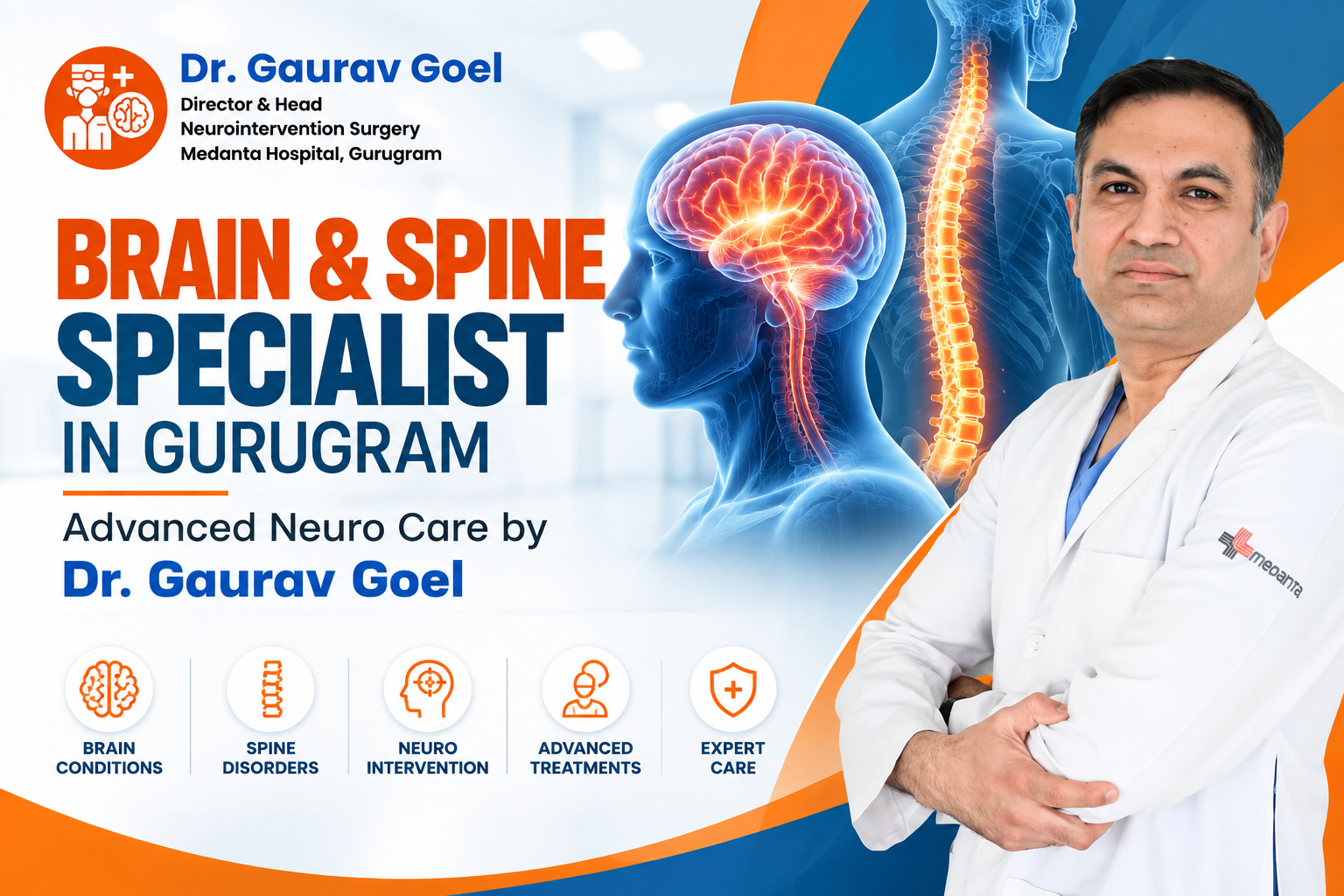
Dr. Gaurav Goel is a neurointervention specialist associated with Medanta – The Medicity, Gurugram. His areas of expertise include brain aneurysm treatment, stroke intervention, arteriovenous malformation (AVM) embolisation, vascular interventions, and spine pain management.
Who Is a Brain and Spine Specialist?
A brain and spine specialist evaluates and manages conditions affecting the brain, spinal structures, blood vessels supplying the nervous system, and related nerves.
Depending on the condition, patients may need care from a neurologist, neurosurgeon, or neurointervention specialist.
- Neurologists diagnose and medically manage disorders of the brain, spinal cord, and nerves.
- Neurosurgeons specialise in surgical treatment of selected brain, spine, and nervous system conditions.
- Neurointervention specialists use image-guided, minimally invasive procedures to treat certain disorders of the blood vessels in the brain and neck, as well as selected spinal conditions.
Dr. Gaurav Goel specialises in neurointervention, particularly the treatment of vascular disorders affecting the brain and related structures. Choosing the appropriate specialist depends on the diagnosis and the type of treatment required.
Common Conditions Treated by a Brain and Spine Specialist in Gurugram
Brain and spine disorders can develop due to vascular abnormalities, degenerative changes, injuries, or other neurological conditions. Recognising warning signs early can help patients receive appropriate care.
1. Brain Aneurysm
A brain aneurysm is a weakened area in a blood vessel wall that forms a bulge. Some aneurysms remain undetected, while others may rupture and cause bleeding around the brain.
Symptoms of a ruptured aneurysm can include a sudden, extremely severe headache, vomiting, neck stiffness, loss of consciousness, or neurological impairment.
Depending on the aneurysm’s size, location, shape, and rupture risk, treatment may involve monitoring, endovascular coiling, flow-diverter placement, or surgical clipping.
Dr. Gaurav Goel’s neurointervention expertise includes endovascular treatment of intracranial aneurysms.
2. Stroke
A stroke occurs when blood supply to part of the brain is interrupted or when a blood vessel ruptures. It is a medical emergency in which timely treatment can help reduce brain injury.
Common warning signs include:
- Sudden weakness or numbness of the face, arm, or leg, particularly on one side.
- Difficulty speaking or understanding speech.
- Sudden loss of vision or double vision.
- Sudden dizziness, imbalance, or difficulty walking.
- A sudden severe headache, particularly with other neurological symptoms.
Treatment depends on whether the stroke is caused by a blocked blood vessel or bleeding. Selected patients with an ischaemic stroke may benefit from mechanical thrombectomy, a minimally invasive procedure that removes a clot from a blocked artery.
If stroke is suspected, seek emergency medical attention immediately. Do not wait for a routine appointment.
3. Arteriovenous Malformations (AVMs)
An arteriovenous malformation is an abnormal connection between arteries and veins. AVMs in the brain can sometimes cause seizures, headaches, neurological symptoms, or bleeding.
Treatment is individualised according to the AVM’s location, size, blood-flow characteristics, and associated risks.
Options may include endovascular embolisation, microsurgery, stereotactic radiosurgery, or a combination of treatments. Embolisation involves delivering a specialised material through a catheter to reduce or block abnormal blood flow.
A multidisciplinary evaluation helps determine the most appropriate treatment strategy.
4. Carotid Artery Disease
The carotid arteries carry blood to the brain. Plaque buildup can narrow these arteries and increase the risk of stroke.
Some patients have no symptoms, while others may experience transient weakness, speech difficulty, or temporary vision loss.
Depending on the degree of narrowing, symptoms, and overall medical risk, treatment may involve medication, lifestyle changes, and selected procedures such as carotid artery stenting or surgery.
Early assessment is important, especially for patients with a history of transient ischaemic attack or stroke.
5. Spine Pain and Nerve-Related Conditions
Spinal problems can cause neck pain, back pain, radiating limb pain, tingling, numbness, or weakness. Causes may include degenerative disc disease, nerve compression, spinal stenosis, and selected vascular or structural conditions.
Treatment depends on the underlying cause and may include medication, physiotherapy, lifestyle modifications, image-guided interventions, or surgical assessment when indicated.
Dr. Gaurav Goel’s listed areas of expertise include spine pain intervention. Patients with persistent or worsening symptoms should undergo an appropriate clinical evaluation before treatment is selected.
Advanced Treatments Available Through Neurointervention
Neurointervention uses specialised imaging and catheter-based techniques to reach blood vessels or other targeted structures without requiring a large surgical incision in many cases.
Depending on the diagnosis, procedures may include:
Endovascular coiling: Tiny coils are placed inside a suitable aneurysm to help prevent blood from entering the aneurysm sac.
Flow-diverter placement: A specialised stent is placed across the opening of selected aneurysms to redirect blood flow and encourage gradual healing.
AVM embolisation: A catheter-based procedure is used to reduce or block abnormal blood flow through selected vascular malformations.
Mechanical thrombectomy: A clot is removed from a blocked brain artery in eligible patients with acute ischaemic stroke.
Carotid or intracranial stenting: A stent may be used to improve blood flow in selected cases of arterial narrowing.
Spine pain interventions: Image-guided procedures may be considered for certain spinal pain conditions after clinical evaluation.
Not every patient is suitable for every procedure. The benefits, risks, alternatives, and expected outcomes should be discussed with the treating specialist.
When Should You Consult a Brain and Spine Specialist?
You should consider specialist assessment if you experience persistent or recurring neurological symptoms, unexplained nerve-related pain, or have been diagnosed with a brain or spinal vascular condition.
Seek medical advice for:
- Recurrent headaches that are new, changing, or worsening.
- Persistent neck or back pain accompanied by tingling or numbness.
- Episodes of unexplained weakness or temporary vision loss.
- A diagnosed brain aneurysm or AVM requiring specialist review.
- Carotid artery narrowing or a history of transient ischaemic attack.
- Follow-up after stroke or a neurointerventional procedure.
Important: Sudden facial drooping, weakness on one side, speech difficulty, a thunderclap headache, loss of consciousness, or new severe neurological symptoms require emergency care rather than a routine specialist appointment.
How Is a Brain or Spine Condition Diagnosed?
Accurate diagnosis helps determine whether a patient needs medication, monitoring, an intervention, or surgery.
The evaluation may include:
- Medical history and neurological examination: The doctor assesses symptoms, medical history, movement, sensation, coordination, and other relevant neurological functions.
- MRI or CT scans: Imaging helps identify structural abnormalities, bleeding, stroke, or other brain and spinal conditions.
- CT angiography or MR angiography: These tests can provide detailed images of blood vessels and help evaluate aneurysms, arterial narrowing, and vascular malformations.
- Digital subtraction angiography: In selected cases, this specialised test provides detailed information about blood flow and vascular anatomy.
- Additional investigations: Blood tests and other assessments may be recommended according to the suspected diagnosis.
Not every patient needs all these investigations. The specialist recommends tests based on the clinical findings.
Why Choose Dr. Gaurav Goel for Neurointervention in Gurugram?
Dr. Gaurav Goel is a Senior Director and Head of Neurointervention Surgery at Medanta – The Medicity, Gurugram, according to his professional profile.
His training includes a DM in Neuroradiology from NIMHANS, Bengaluru, and a fellowship in Interventional Neuroradiology at the Montreal Neurological Institute, McGill University, Canada.
His clinical expertise includes:
- Intracranial aneurysm coiling and flow-diverter procedures.
- AVM embolisation.
- Carotid and intracranial stenting.
- Endovascular treatment of selected vascular disorders.
- Stroke interventions, including mechanical thrombectomy.
- Spine pain management and selected interventions.
For patients with brain or vascular conditions requiring specialised evaluation, consultation can help clarify the diagnosis, available treatment options, and whether a minimally invasive procedure may be appropriate.
Treatment decisions should always be based on individual clinical needs, the available evidence, and a discussion of potential benefits and risks.
How to Prepare for Your Consultation?
To make your appointment more productive, bring:
- Previous MRI, CT, angiography, or other imaging reports.
- Current prescriptions and a list of medications.
- Details of any previous stroke, vascular procedure, or hospital admission.
- A record of your symptoms, including when they started and how they have changed.
- Relevant medical history, including high blood pressure, diabetes, or blood-thinning medication use.
If you are experiencing an acute neurological emergency, do not delay emergency care to collect documents.
Conclusion
Finding the right brain and spine specialist in Gurugram is an important step when dealing with neurological symptoms or complex vascular conditions. Early diagnosis and an individualised treatment plan can help patients understand their options and receive appropriate care.
Dr. Gaurav Goel specialises in neurointervention, with expertise in aneurysm treatment, stroke intervention, AVM embolisation, vascular stenting, and selected spine pain interventions at Medanta – The Medicity, Gurugram.
If you have been diagnosed with a brain or vascular condition or need specialist advice about neurointerventional treatment, consult a qualified specialist to discuss the next steps.
Frequently Asked Questions (FAQs)
1. Who is a brain and spine specialist in Gurugram?
A brain and spine specialist evaluates conditions affecting the brain, spine, nervous system, and related blood vessels. The appropriate specialist may be a neurologist, neurosurgeon, or neurointervention specialist, depending on the condition. Dr. Gaurav Goel specialises in neurointervention at Medanta – The Medicity, Gurugram.
2. What conditions does Dr. Gaurav Goel treat?
His listed areas of expertise include intracranial aneurysms, arteriovenous malformations, stroke interventions, carotid and intracranial stenting, vascular headaches, and selected spine pain conditions.
3. What is neurointervention?
Neurointervention is a specialised field that uses image-guided, minimally invasive techniques to diagnose or treat certain disorders affecting blood vessels in the brain and neck and selected spinal conditions. Procedures may include aneurysm coiling, flow-diverter placement, embolisation, and mechanical thrombectomy.
4. Can a brain aneurysm be treated without open surgery?
Some brain aneurysms can be treated through endovascular procedures, such as coiling or flow-diverter placement. However, the appropriate treatment depends on the aneurysm’s characteristics and the patient’s overall health. Some aneurysms require monitoring or other treatment approaches.
5. Is a stroke a medical emergency?
Yes. A stroke requires immediate medical assessment. Sudden facial drooping, arm weakness, speech difficulty, loss of balance, or vision changes should prompt an immediate call to emergency services. Early treatment can improve outcomes in eligible patients.
6. What is the difference between a neurologist, neurosurgeon, and neurointervention specialist?
A neurologist primarily diagnoses and medically manages neurological disorders. A neurosurgeon performs surgical procedures for selected brain and spinal conditions. A neurointervention specialist uses image-guided catheter-based techniques to treat certain vascular and related conditions.
7. When should I consult a spine specialist for back pain?
Consult a qualified specialist if back or neck pain persists, recurs frequently, or is associated with numbness, tingling, radiating pain, or weakness. New bladder or bowel dysfunction, saddle-area numbness, or rapidly progressive weakness requires emergency assessment.
8. Which tests may be required for brain and spine conditions?
Depending on the suspected condition, investigations may include MRI, CT, CT angiography, MR angiography, or digital subtraction angiography. The doctor selects tests according to symptoms and examination findings.
9. Are minimally invasive brain procedures safe?
Minimally invasive neurointerventional procedures can be effective for appropriately selected patients, but they carry risks, as do other medical procedures. The treating specialist should explain the expected benefits, potential complications, alternatives, and recovery requirements.
10. How can I book a consultation with Dr. Gaurav Goel in Gurugram?
You can visit Dr. Gaurav Goel’s official website at https://drgauravgoel.org/ to review his professional profile and contact details or enquire about an appointment at Medanta – The Medicity, Gurugram.