
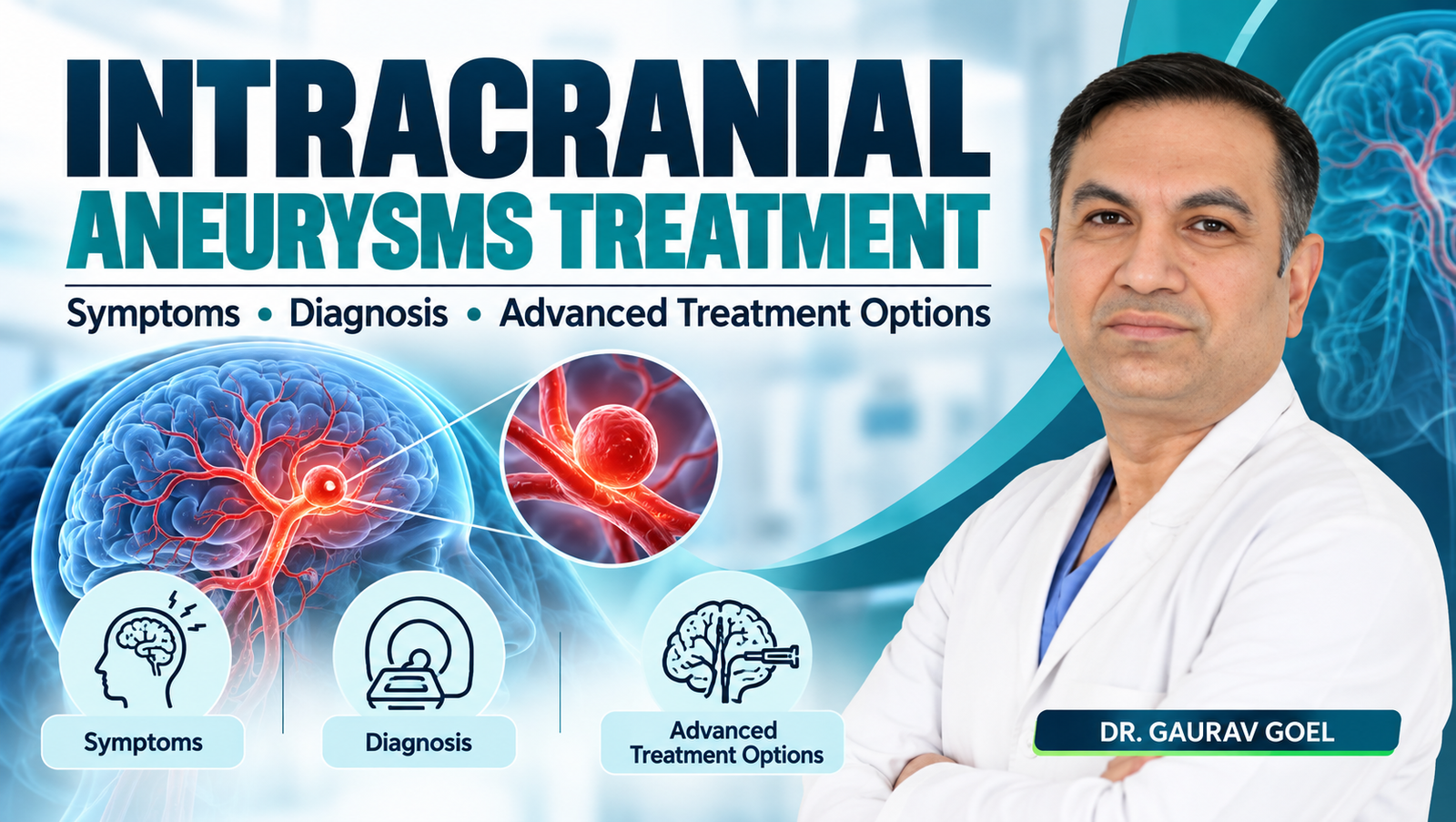
An intracranial aneurysm is a weak area in the wall of a blood vessel inside the brain that develops into a bulge. Although some aneurysms remain small and cause no symptoms, others may enlarge, press on nearby structures or rupture, resulting in life-threatening bleeding around the brain.
Early diagnosis and appropriate treatment planning are essential to reduce the risk of serious complications. Depending on the aneurysm’s size, location, shape and risk of rupture, treatment may involve regular monitoring, microsurgical clipping or minimally invasive endovascular procedures.
If you are looking for information about intracranial aneurysms treatment, understanding the warning signs, diagnostic tests and available treatment options can help you make informed decisions about your neurological health.
Dr. Gaurav Goel’s website provides information about neurological and neurosurgical care. Patients diagnosed with a brain aneurysm should seek an assessment from a suitably qualified neurosurgeon or neurovascular specialist to determine the most appropriate treatment.
What Is an Intracranial Aneurysm?
An intracranial aneurysm, also called a cerebral aneurysm or brain aneurysm, develops when a weakened section of an artery inside the skull bulges outward.
Many aneurysms are discovered incidentally during brain imaging performed for another reason. However, an aneurysm may become dangerous if it grows or ruptures.
When an aneurysm ruptures, blood can leak into the space surrounding the brain, causing a condition called subarachnoid haemorrhage. This can lead to brain injury, stroke, disability or death without urgent medical treatment.
Intracranial aneurysms may occur in different blood vessels within the brain. Their treatment depends on their characteristics and the individual’s medical history.
What Are the Types of Intracranial Aneurysms?
Brain aneurysms are classified according to their shape and structure.
1. Saccular Aneurysm
A saccular aneurysm, often called a berry aneurysm, appears as a rounded pouch projecting from an artery. It is one of the most common types of intracranial aneurysm.
2. Fusiform Aneurysm
A fusiform aneurysm involves a more extended, circumferential widening of a blood vessel rather than a single pouch. Treatment can be more complex depending on its location and anatomy.
3. Dissecting Aneurysm
A dissecting aneurysm develops when blood enters a tear within the layers of an artery wall, separating them. The management depends on the affected vessel, symptoms and risk of complications.
Identifying the aneurysm type helps specialists determine whether monitoring, endovascular treatment or surgery is appropriate.
What Causes Intracranial Aneurysms?
Intracranial aneurysms can develop due to a combination of inherited susceptibility, blood vessel wall weakness and other risk factors.
Commonly recognised risk factors include:
- High blood pressure
- Cigarette smoking
- A family history of brain aneurysms or aneurysmal bleeding
- Certain inherited connective tissue disorders
- Autosomal dominant polycystic kidney disease
- Increasing age
- Previous history of an aneurysm or aneurysmal haemorrhage
Some aneurysms develop without an identifiable risk factor.
Managing high blood pressure, stopping smoking and addressing relevant medical conditions can help reduce vascular risk. However, these measures cannot eliminate the risk associated with an existing aneurysm.
What Are the Symptoms of an Intracranial Aneurysm?
Symptoms depend on whether the aneurysm is unruptured, pressing on surrounding structures or has ruptured.
Symptoms of an Unruptured Brain Aneurysm
Many unruptured aneurysms do not produce noticeable symptoms. Larger aneurysms may press on nearby nerves or brain tissue and cause:
- Pain around or behind one eye
- Double vision or other visual changes
- Drooping eyelid
- Dilated pupil
- Facial numbness or weakness
- Persistent headaches
- Difficulty with certain eye movements
These symptoms can have many causes and require appropriate medical assessment.
Warning Signs of a Ruptured Brain Aneurysm
A ruptured aneurysm may cause:
- A sudden, extremely severe headache that reaches maximum intensity quickly
- Nausea and vomiting
- Neck stiffness
- Sensitivity to light
- Seizures
- Confusion or altered consciousness
- Sudden weakness or neurological deficits
- Loss of consciousness
Medical emergency: A sudden, severe headache or suspected brain aneurysm rupture requires immediate emergency medical care. Do not wait for a routine appointment or attempt to manage these symptoms at home.
How Are Intracranial Aneurysms Diagnosed?
Accurate diagnosis helps establish the aneurysm’s size, shape, location and likelihood of rupture. A neurosurgeon or neurovascular specialist may recommend one or more of the following investigations.
1. CT Scan of the Brain
A non-contrast CT scan is often the first investigation when a ruptured aneurysm or bleeding around the brain is suspected. It can help detect acute haemorrhage and other urgent abnormalities.
2. CT Angiography (CTA)
CTA uses contrast material and specialised imaging to show the brain’s blood vessels. It helps identify aneurysms and assess their size, shape and anatomical relationship with nearby vessels.
3. Magnetic Resonance Angiography (MRA)
MRA uses magnetic resonance imaging techniques to visualise blood vessels. It may be used to detect unruptured aneurysms and monitor selected patients over time.
4. Digital Subtraction Angiography (DSA)
DSA is an invasive angiographic procedure that provides detailed images of blood vessels. It may be recommended when more precise information is needed for diagnosis or treatment planning.
The choice of investigation depends on the clinical situation. If a rupture is suspected, emergency assessment and appropriate imaging should not be delayed.
Intracranial Aneurysms Treatment Options
The goal of treatment is to prevent rupture, stop bleeding when rupture has occurred and reduce the risk of further neurological damage.
Not every aneurysm requires immediate surgery. A specialist team evaluates the potential risk of rupture against the risks of treatment before recommending a management plan.
1. Observation and Regular Monitoring
Small, unruptured aneurysms with a relatively low estimated risk of rupture may be managed with regular imaging and medical follow-up.
Monitoring may include CTA or MRA at intervals determined by the treating specialist.
The decision to observe an aneurysm depends on several factors, including:
- Aneurysm size and location
- Shape and irregularity
- Evidence of growth on follow-up imaging
- Patient age and general health
- Family history and previous aneurysmal bleeding
- Risks associated with preventive treatment
Observation does not mean ignoring the aneurysm. Patients need an agreed follow-up plan and appropriate management of risk factors.
2. Microsurgical Clipping
Microsurgical clipping is an operation performed through an opening in the skull, called a craniotomy.
The surgeon carefully exposes the aneurysm and places a small metal clip across its neck to prevent blood from entering the bulging area.
Potential benefits include:
- Direct treatment of the aneurysm
- Durable exclusion of many aneurysms from circulation
- Suitability for selected aneurysms based on their location and anatomy
Clipping requires open surgery and carries risks, including bleeding, infection, stroke and injury to nearby blood vessels or nerves.
The suitability of clipping depends on the aneurysm’s characteristics and the patient’s medical condition.
3. Endovascular Coiling
Endovascular coiling is a minimally invasive procedure performed from inside the blood vessels.
A specialist guides a thin catheter through an artery, usually accessed through the wrist or groin, towards the aneurysm. Small detachable coils are then placed inside the aneurysm to reduce blood flow into it and promote clot formation.
Potential benefits include:
- No need for a traditional open craniotomy
- Access to certain aneurysms that may be difficult to treat surgically
- Potentially shorter initial recovery compared with open surgery in selected patients
However, coiling is not appropriate for every aneurysm. Some aneurysms may require additional devices or follow-up procedures, and imaging surveillance may be needed to check for recurrence or incomplete occlusion.
4. Flow Diversion
Flow diversion involves placing a specialised stent-like device inside the parent artery across the opening of an aneurysm.
The device redirects blood flow along the artery and away from the aneurysm, allowing the aneurysm to gradually thrombose in selected cases.
Flow diversion may be considered for certain large, wide-necked or anatomically complex aneurysms.
The procedure requires careful patient selection. Antiplatelet medicines are commonly necessary, and the risks and follow-up requirements must be discussed with the treating specialist.
5. Treatment of a Ruptured Intracranial Aneurysm
A ruptured aneurysm requires emergency hospital care.
The medical team aims to secure the aneurysm as soon as clinically appropriate to reduce the risk of rebleeding. Depending on the aneurysm’s anatomy and the patient’s condition, treatment may involve clipping or an endovascular procedure.
Additional treatment may be required to manage complications such as:
- Vasospasm and delayed cerebral ischaemia
- Hydrocephalus, or excess cerebrospinal fluid accumulation
- Seizures
- Abnormal blood pressure
- Neurological impairment
Patients may need intensive care, close neurological monitoring and rehabilitation following a rupture.
Which Is Better: Brain Aneurysm Clipping or Coiling?
Clipping and coiling are established approaches, but neither is universally better for every patient.
| Factor | Microsurgical clipping | Endovascular coiling |
|---|---|---|
| Approach | Open surgery through a craniotomy | Catheter-based treatment through blood vessels |
| Main technique | A clip closes the aneurysm neck | Coils fill the aneurysm cavity |
| Recovery | May involve a longer initial recovery | May offer a shorter initial recovery in selected cases |
| Suitability | Depends on location, anatomy and surgical risk | Depends on location, anatomy and endovascular feasibility |
| Follow-up | Imaging may be required | Imaging is often required to assess durability and recurrence |
Other techniques, including flow diversion, may be suitable for selected aneurysms.
The treatment decision should be made after reviewing the imaging and discussing the benefits, limitations and potential complications of each appropriate option.
What Are the Risks of Intracranial Aneurysm Treatment?
Brain aneurysm treatment is complex, and the risks vary according to the aneurysm, the procedure and the patient’s health.
Potential complications include:
- Stroke or reduced blood supply to part of the brain
- Bleeding
- Infection
- Seizures
- Injury to nearby nerves or blood vessels
- Blood clots
- Incomplete aneurysm closure
- Aneurysm recurrence or regrowth
- Complications associated with anaesthesia
- Persistent neurological deficits
The risks of treating an unruptured aneurysm must be carefully weighed against its estimated risk of rupture. For a ruptured aneurysm, emergency treatment is generally necessary because of the risk of rebleeding and other serious complications.
Recovery After Intracranial Aneurysm Treatment
Recovery depends on whether the aneurysm was ruptured, the type of procedure performed and the presence of neurological complications.
After Endovascular Treatment
Patients are monitored for neurological changes, bleeding at the catheter access site and other complications. Some may leave the hospital relatively quickly, while others require a longer stay depending on their condition.
After Microsurgical Clipping
Recovery may involve monitoring in hospital, wound care, pain management and gradual resumption of daily activities. Recovery can take longer than after an uncomplicated endovascular procedure.
After a Ruptured Aneurysm
Patients may require intensive care and extended rehabilitation. Recovery may involve physiotherapy, occupational therapy, speech therapy or cognitive rehabilitation, depending on the effects of the haemorrhage.
Follow-up appointments and imaging are important to assess treatment results and identify any need for further care.
How Can You Reduce the Risk of Brain Aneurysm Complications?
Although not all aneurysms can be prevented, certain measures can help reduce vascular risk and support overall brain health.
- Maintain blood pressure within the range recommended by your doctor.
- Stop smoking and avoid exposure to tobacco smoke.
- Avoid cocaine and other illicit stimulants that can sharply increase blood pressure.
- Attend recommended follow-up imaging appointments.
- Take prescribed medication as directed.
- Discuss a significant family history of brain aneurysms with your doctor.
Do not start aspirin or other blood-thinning medicines specifically to prevent aneurysm rupture without medical advice. Medication decisions depend on your individual condition.
When Should You Consult a Neurosurgeon?
You should seek specialist assessment if:
- Imaging has identified an intracranial aneurysm.
- You have a family history of aneurysmal bleeding and have concerns about your risk.
- Your aneurysm has increased in size on follow-up scans.
- You have persistent visual symptoms or other neurological symptoms that require investigation.
- You need a second opinion about clipping, coiling or another treatment option.
If you experience a sudden, extremely severe headache, collapse, seizure or new neurological weakness, seek emergency medical care immediately rather than waiting for a specialist consultation.
Intracranial Aneurysms Treatment with Dr. Gaurav Goel
A diagnosis of an intracranial aneurysm can raise questions about the risk of rupture, treatment choices and long-term outcomes. A specialist assessment helps explain the findings and determine whether observation, preventive treatment or emergency intervention is appropriate.
Dr. Gaurav Goel’s website provides information about his neurological and neurosurgical practice. Patients seeking care for a brain aneurysm should confirm the relevant treatment services and arrange an evaluation with a suitably qualified neurosurgeon or neurovascular team.
The final treatment plan should be based on detailed imaging, the patient’s medical history, the risks of intervention and the expected benefits of treatment.
Visit the official website: https://drgauravgoel.org/
Frequently Asked Questions (FAQs)
1. What is the best treatment for an intracranial aneurysm?
The best treatment depends on the aneurysm’s size, location, shape, rupture risk and the patient’s health. Options include monitoring, microsurgical clipping, endovascular coiling and flow diversion.
2. Can an intracranial aneurysm be treated without surgery?
Yes. Selected unruptured aneurysms may be monitored with regular imaging and risk-factor management when the estimated risk of rupture is low relative to the risks of treatment. A ruptured aneurysm, however, requires emergency hospital care and usually prompt aneurysm repair.
3. Is an intracranial aneurysm life-threatening?
An unruptured aneurysm may remain stable for years, but rupture can cause life-threatening bleeding around the brain. The level of risk varies, so individual assessment is important.
4. What are the warning signs of a ruptured brain aneurysm?
The most recognised warning sign is a sudden, extremely severe headache. Other symptoms include vomiting, neck stiffness, light sensitivity, seizures, confusion and loss of consciousness. These symptoms require immediate emergency medical attention.
5. What is the difference between clipping and coiling?
Clipping is an open surgical procedure in which a clip closes the aneurysm neck. Coiling is a catheter-based procedure that places coils inside the aneurysm. The choice depends on the aneurysm’s anatomy and the risks and benefits of each procedure.
6. How long does recovery take after brain aneurysm treatment?
Recovery varies. Patients undergoing uncomplicated endovascular treatment may recover more quickly than those requiring open surgery, but individual outcomes differ. A ruptured aneurysm can require intensive care and months of rehabilitation.
7. Can an intracranial aneurysm return after treatment?
Some aneurysms may recur, enlarge or remain incompletely closed after treatment. Follow-up imaging helps determine whether additional monitoring or treatment is needed.
8. Can high blood pressure increase the risk of aneurysm rupture?
High blood pressure is an important risk factor associated with aneurysm formation and rupture. Proper blood pressure management is an important part of care, although it cannot eliminate the risk entirely.
9. Does every brain aneurysm need surgery?
No. Some small, stable aneurysms may be monitored rather than treated immediately. Specialists weigh the estimated risk of rupture against the potential complications of preventive treatment before recommending an approach.
10. Which doctor treats intracranial aneurysms?
Intracranial aneurysms are assessed by specialists such as neurosurgeons and neurointerventional specialists. A multidisciplinary team may include neurologists, neuroradiologists and critical-care specialists, particularly when an aneurysm has ruptured.
Conclusion
Intracranial aneurysms require careful evaluation because their risks and treatment options vary significantly from one patient to another. Early diagnosis, appropriate imaging, risk-factor management and specialist-guided treatment can help reduce the risk of serious complications.
If you or a family member has been diagnosed with a brain aneurysm, consult a suitably qualified neurosurgeon or neurovascular specialist to understand the available options and the appropriate next steps.
For more information about neurological care, visit Dr. Gaurav Goel’s official website: https://drgauravgoel.org/